This year’s campaign, taking place from May 2-8, 2026, will focus on the theme “Take Care of those Who Care”
The World PICU Awareness Week Committee exists to raise awareness about #PedsICU in general and any important themes impacting the specialty by engaging members and key stakeholders in awareness and advocacy activities at a global and regional level. This 7 day event culminates in World PICU Awareness Day on the 2nd Friday of May, annually.
This year’s campaign, taking place from May 2-8, 2026, will focus on the theme “Take Care of those Who Care”
The 2026 campaign focuses on caregiver wellbeing as a fundamental pillar of safe, ethical, and sustainable pediatric intensive care.
The aim of the 2026 World PICU Awareness Week campaign is to elevate caregiver wellbeing as a global priority in pediatric and neonatal critical care.
Specifically, the campaign seeks to:
Raise awareness of caregiver wellbeing as directly linked to patient safety, quality of care, and family-centered outcomes.
Acknowledge the emotional, ethical, and psychological burden faced by healthcare professionals, including workload intensity, moral distress, workforce shortages, and exposure to suffering and death.
Highlight workforce challenges shared across high-resource and low-resource settings, emphasizing that caregiver strain is a global issue, not a local failure.
Promote evidence-based, system-level supportive practices that foster psychological safety, resilience, and professional fulfillment.
Encourage open, stigma-free dialogue across professions and disciplines, normalizing conversations about stress, burnout, and mental health.
Shift the narrative from individual resilience to institutional and leadership responsibility in protecting caregiver wellbeing.
Advocate for sustainable workforce strategies that support retention, professional growth, and long-term resilience of PICU services worldwide.
The psychological and emotional health of PICU professionals directly influences clinical judgment, communication, teamwork, and patient outcomes in pediatric intensive care.
Workforce strain, staffing models, moral distress, and organizational culture play a central role in burnout. Addressing wellbeing requires institutional accountability, not just personal resilience.
Simple actions – ethical debriefs, reflective rounds, protected discussion spaces, recognition practices – can meaningfully improve team morale and psychological safety.
Framing stress as an occupational reality rather than a personal weakness encourages earlier recognition, open conversations, and timely support.
Protecting the wellbeing of the PICU workforce is essential for retention, professional fulfillment, and the long-term resilience of pediatric critical care systems worldwide.
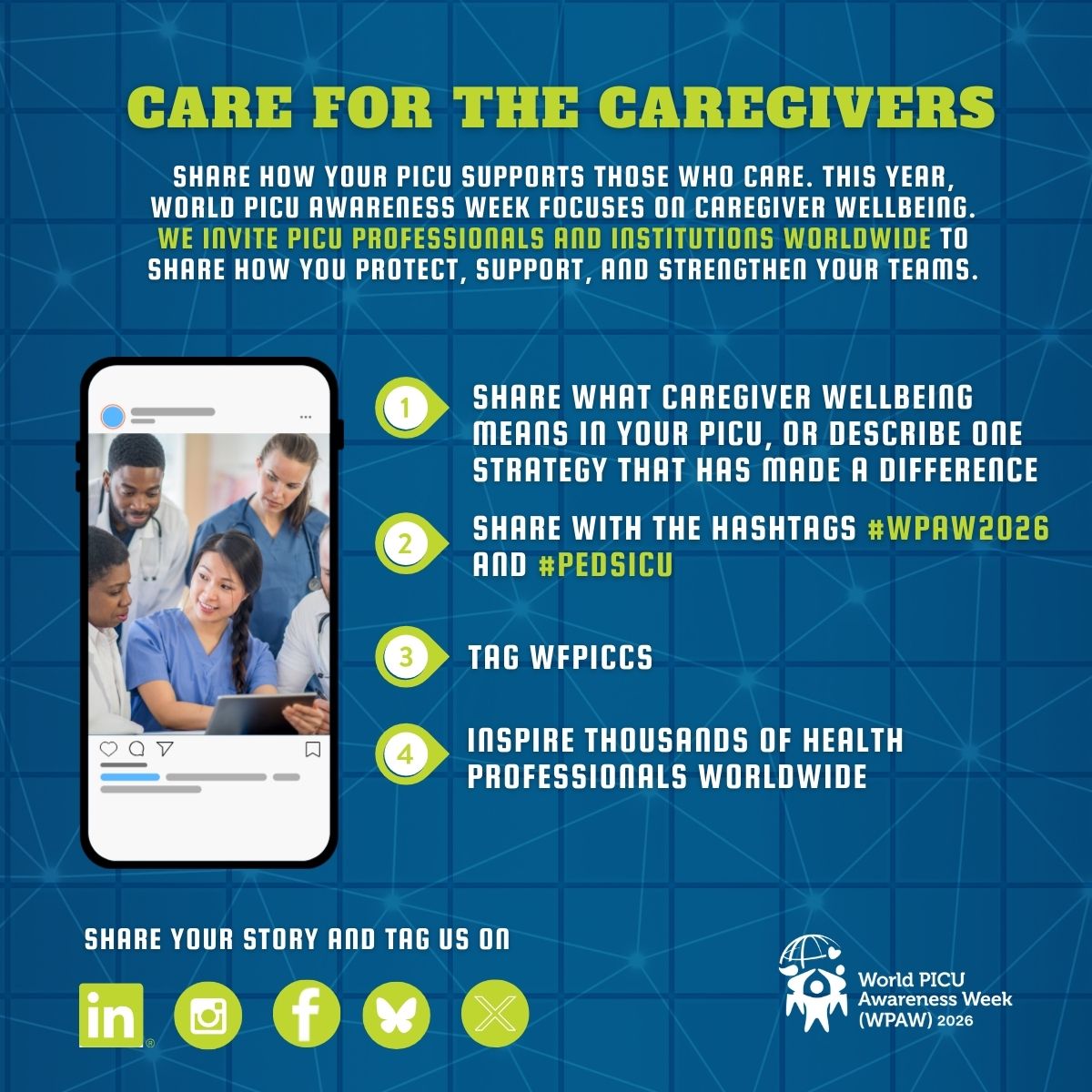
You’re invited! As part of World PICU Awareness Week 2026 (May 2–8), we invite PICU professionals and institutions worldwide to share how you support caregiver wellbeing in your pediatric intensive care unit.
This year’s theme, Take Care of Those Who Care, highlights a simple but powerful truth:
Caregiver wellbeing is patient safety.
We want to showcase how PICUs across the world are protecting, strengthening, and sustaining their teams – through leadership, culture, practical tools, or small intentional changes that make a difference.
Whether you work in a high-resource tertiary center or a resource-limited setting, your experience matters.
• What does caregiver wellbeing mean in your PICU?
• What are you or your institution doing to actively support caregiver wellbeing?
You may reflect on the cultural importance of wellbeing in pediatric intensive care, describe a concrete initiative or policy, or share a small change that has made a meaningful difference in your team.
A particular focus could be on topics like:
In this opening episode of the World PICU Awareness Week 2026 podcast series, we explore caregiver wellbeing through the lens of the Oceania region.
Moderated by Jacinta Winderlich (Australia), this episode features Dr. Liz Crowe, a leading expert in clinician wellbeing with over two decades of experience in pediatric intensive care and extensive research on workforce sustainability.
The conversation challenges conventional narratives around burnout and distress in PICU, shifting the focus toward what sustains healthcare professionals in this demanding environment. Drawing on both clinical experience and research, Dr. Crowe highlights the importance of meaning, team dynamics, and system-level responsibility in supporting those who deliver care.
This episode offers a thought-provoking perspective on how PICU teams can move beyond individual-focused solutions and instead foster environments where clinicians can continue to thrive.
In this Asia episode of the World PICU Awareness Week 2026 podcast, experts and families come together to explore the human side of pediatric intensive care – where caregiver wellbeing, communication, and cultural sensitivity play a central role.
Through powerful real-life experiences, the discussion highlights the importance of family-centered care, emotional support, and multidisciplinary collaboration in navigating the challenges of critical illness.
In this episode of the World PICU Awareness Week 2026 podcast series, we explore caregiver wellbeing through a Nordic perspective, with contributions from clinicians and researchers across Europe.
Moderated by Prof. Janet Mattsson, this discussion brings together experienced PICU professionals from Sweden and Denmark to reflect on how wellbeing is supported in daily clinical practice.
The conversation highlights the importance of structured approaches – from team check-ins and mentorship to ethical discussions and simulation-based learning – while also acknowledging the real challenges of implementing these practices in busy, high-demand PICU environments.
In this episode of the World PICU Awareness Week 2026 podcast series, we explore caregiver wellbeing through the lens of Latin America – a region characterized by resilience, diversity, and a strong commitment to delivering high-quality care in often resource-constrained environments.
Moderated by Dr. Lorena Acevedo, this conversation brings together multidisciplinary perspectives from across the region, including physicians, nursing, and allied health professionals.
The discussion highlights innovative and structured approaches to caregiver support, such as the CRECEP model, which integrates “caring for the caregiver” as a core pillar of care. It also explores how institutional programs, peer support, education, and simulation contribute to building safer and more supportive environments for healthcare professionals.
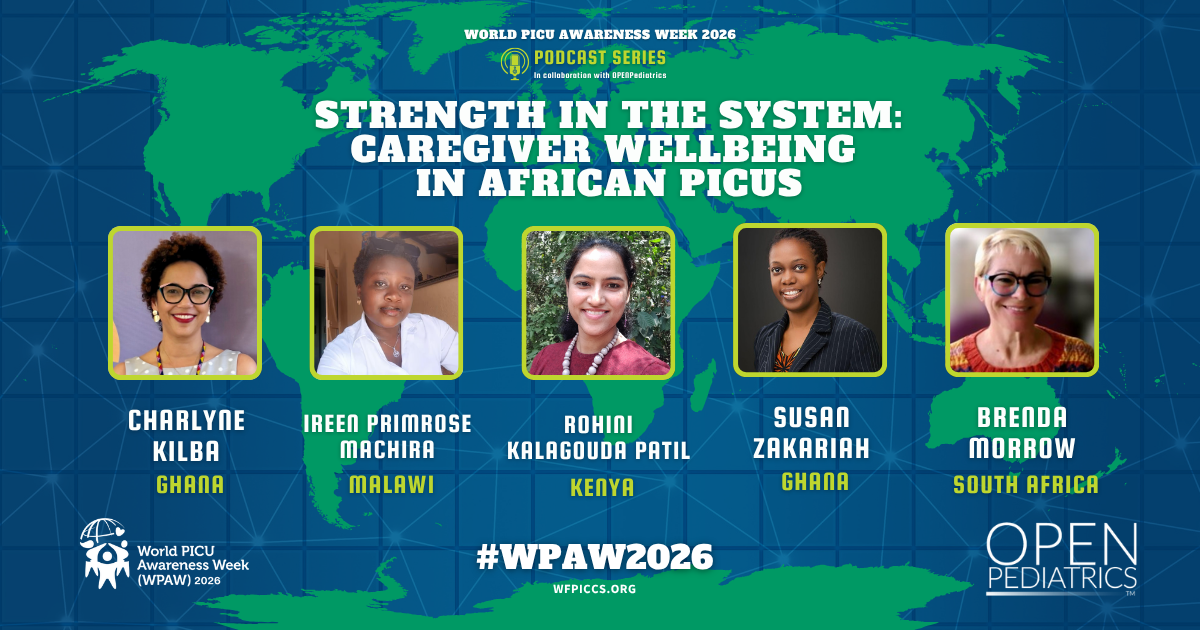
In this episode of the World PICU Awareness Week 2026 podcast series, we explore caregiver wellbeing through the perspective of PICU teams across Africa.
Moderated by Dr. Charlyne Kilba, this discussion brings together multidisciplinary voices from across the continent, highlighting both the shared challenges and the strength of teams working in resource-limited, high-demand environments.
The conversation provides an honest reflection on the realities of pediatric critical care in Africa – including staff shortages, high patient volumes, ethical dilemmas, and limited access to essential resources – and how these factors impact the wellbeing of healthcare professionals.
At the same time, the episode showcases powerful and practical approaches to support caregivers, including team-based support systems, debriefing practices, spirituality, and community-driven initiatives. A strong emphasis is placed on resilience – not only at the individual level, but as a collective and system-supported effort.
In this North America episode of the World PICU Awareness Week 2026 podcast, leading experts explore how leadership directly influences caregiver wellbeing and burnout in pediatric intensive care.
Through practical examples and evidence-based insights, the discussion highlights the importance of listening to teams, addressing system-level challenges, and fostering a culture where wellbeing is embedded into everyday practice.
From leadership behaviors to institutional support, this episode emphasizes a clear message: sustainable PICU care starts with how we lead.
This episode of the World PICU Awareness Week 2026 podcast series explores the realities of working in pediatric intensive care across the Middle East, with a focus on the wellbeing of healthcare professionals.
Through expert insights and real-life experiences, the discussion highlights the emotional impact of high-intensity PICU environments – moving beyond burnout to address deeper challenges such as moral distress and moral injury. Practical strategies are shared, from simple daily practices that strengthen team connection to structured organizational initiatives that support resilience and retention.
The episode also examines the role of leadership in fostering psychologically safe environments, as well as the influence of culture, family dynamics, and faith in shaping care across the region.
During World PICU Awareness Week 2026 (May 2–8), this page will feature selected video contributions shared by PICU professionals and institutions around the world.
To be included:
Record your 60-second video on caregiver wellbeing.
Post it on your social media platform (LinkedIn, X, Instagram, Facebook, etc.).
Use the hashtags #WPAW2026 and #PedsICU.
Tag WFPICCS in your post so we can find and amplify your contribution.
Throughout the week, we will curate and showcase videos that reflect the global effort to Take Care of Those Who Care.
Join the movement. Share your voice. Inspire change.